
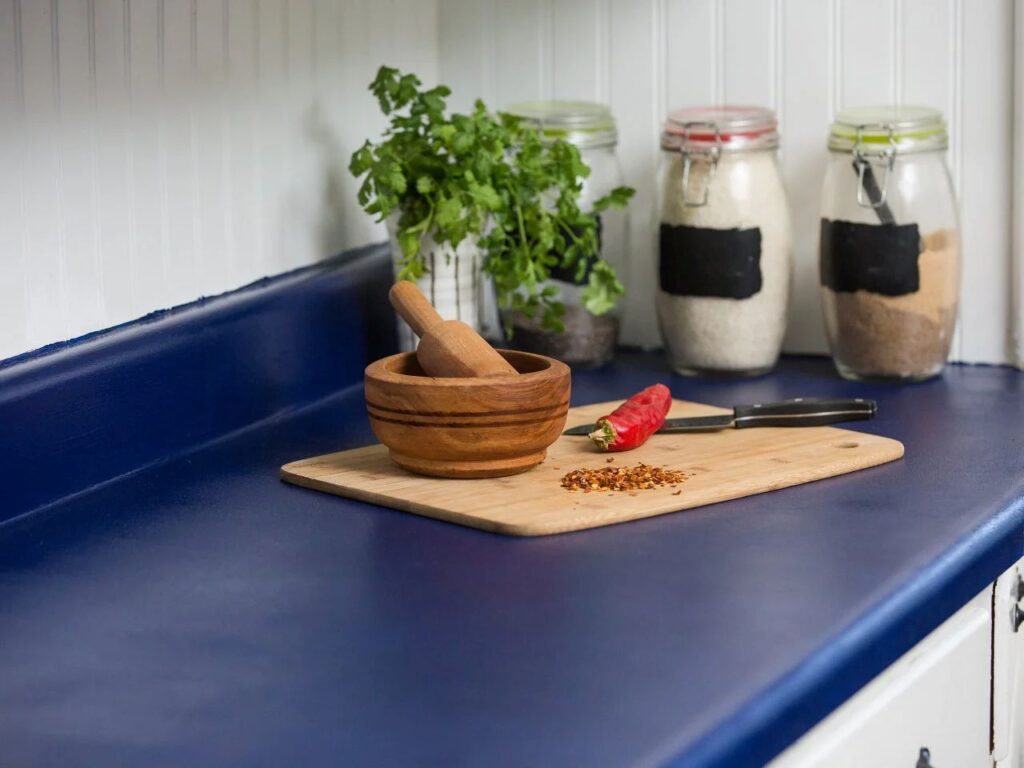
Giving your kitchen a fresh look doesn’t always require a full renovation. Sometimes, a simple paint job on your countertops can make just as big an impact as updating your kitchen cabinetry. The process takes some patience, but it’s totally doable for most homeowners. This guide covers everything from surface prep to sealing and maintenance. With the right approach, you can get a durable, professional-looking finish that lasts.
Surface Preparation
Before you start painting your kitchen countertops, proper prep work is non-negotiable for a clean finish. Start by cleaning the countertops with a mild detergent to remove any grease or dirt. Then lightly sand the surface to help the paint stick better. Fill any cracks or holes with filler and sand smooth once dry. Prime the countertops with a high-quality bonding primer so the paint adheres properly. Tape off areas you want to protect and lay down drop cloths to catch any spills. The prep work is honestly what makes or breaks the final result.
Choosing the Right Paint
Picking the right paint for your countertops matters more than you might think. Go with a high-quality acrylic paint made for high-traffic areas. Look for paints formulated for surfaces that see heavy use and may come into contact with water or heat. These paints usually have additives that boost durability and stain resistance. A satin or semi-gloss finish works best since it’s easier to clean and holds up better against scratches. Spending a bit more on quality paint now saves you from having to redo the job later.
Applying Primer
Primer creates a uniform surface for paint to adhere to, resulting in better longevity and a cleaner finish. Before applying, make sure the countertop is clean and completely dry. Use a high-quality countertop bonding primer. Apply it evenly with a brush or roller, and follow the manufacturer’s drying times between coats. Several thin coats provide better coverage and durability than one thick coat. Let the primer cure fully before moving on to paint. This step sets up everything that comes after.
Painting Techniques
Getting the technique right is what separates a DIY job from a pro-level finish. Here are three tips to help you nail it:
- Smooth, Even Strokes: Use a quality brush or roller to apply paint in smooth, even strokes. This prevents streaks and keeps the finish consistent across the whole surface.
- Blend Your Edges: As you paint, blend the edges of each stroke so the paint merges seamlessly. This avoids visible lines or color changes on the countertop.
- Thin Layers Over Thick: Skip the urge to slap on a single heavy coat. Multiple thin layers give you better adhesion, durability, and a polished look.
Sealing the Finish
Once the paint dries completely, sealing is what protects all that hard work. A good seal guards against scratches, stains, and heat, so your countertops stay fresh longer. Use a high-quality polyurethane sealant made for countertops. Apply it evenly with a clean brush or roller, following the manufacturer’s drying instructions between coats. Two to three coats usually do the trick. Let the sealant cure completely before using the countertops. Proper sealing adds durability and gives your project that professional touch.
Maintenance Tips
Keeping your painted countertops looking good requires a little regular attention. Here’s how to keep them in shape:
- Regular Cleaning: Wipe down the countertops daily with mild soap and water to catch spills and stains before they set.
- Avoid Harsh Chemicals: Stay away from abrasive cleaners or harsh chemicals that can damage the painted surface. Stick to gentle cleaning products.
- Use Cutting Boards: Always use a cutting board when handling knives or sharp tools. This prevents scratches and keeps your painted surface intact for the long haul.
Related Topics: