
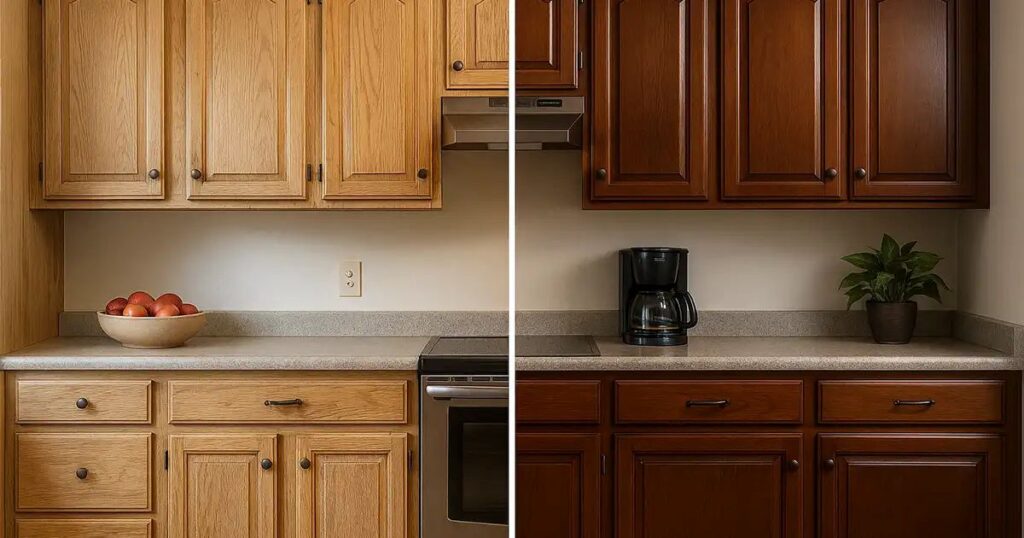
Staining your kitchen cabinets can completely change the look of your space without the cost of a full replacement. This guide walks you through each step so you can get professional-looking results at home. You’ll learn how to properly prep, stain, and protect your cabinets. Even local cabinetmakers follow these basic techniques when refinishing wood surfaces. By the end, you’ll have cabinets that look refreshed and well-protected for years to come.
Preparing the Cabinets
Start by emptying your cabinets and taking off all the hardware. Grab a sponge or cloth with a mild detergent solution and wipe down every surface inside and out. Focus on spots near the stove or sink where grease builds up the most. Rinse everything with a clean, damp cloth to remove any soap residue, then let the cabinets dry completely. Skipping this step can mess with how the stain absorbs, so take your time here. A clean surface sets you up for a smooth, even finish.
Choosing the Right Stain
Picking the right stain comes down to a few factors: wood type, color preference, and the finish you want.
- Wood Type: Hardwoods like oak and maple take stain evenly. Softwoods like pine can turn out blotchy without extra prep work.
- Desired Color: Lighter stains let the natural grain show through, while darker shades give a richer, more dramatic look.
- Finish: Matte feels more rustic, satin hits a nice middle ground, and glossy leans modern.
- Test Samples: Always test your stain on a hidden spot first. You want to make sure it looks right before committing to the whole project.
Sanding and Cleaning
Before staining, you need to sand down the cabinet surfaces to strip any old finish. Use medium-grit sandpaper and go with the wood grain, not against it. This smooths out rough patches and helps the new stain stick properly. Once you’re done sanding, wipe everything down to remove dust and debris. A damp cloth followed by a dry one does the trick. Clean, sanded wood is the foundation for a finish that actually looks good.
Applying the Stain
With your cabinets prepped, it’s time to stain.
- Prepare the Work Area: Put down a drop cloth and crack a window or turn on a fan for airflow.
- Stir the Stain: Mix it well to keep the color consistent throughout.
- Apply the Stain: Use a brush or rag, working in small sections and following the wood grain.
- Wipe Off Excess: Let it sit for a few minutes, then wipe away any extra stain with a clean cloth to avoid streaks or dark spots.
Adding a Protective Finish
Once the stain dries completely, you’ll want to seal it with a protective coat. Lightly sand the surface with fine-grit sandpaper to help the finish adhere, then wipe away dust with a tack cloth. Go with a high-quality polyurethane or varnish that protects against moisture, heat, and everyday use. Apply thin, even coats with a brush or sprayer, always moving with the grain. Let each coat dry fully before lightly sanding and adding the next one. Two to three coats usually do the job.
Reassembling and Enjoying
Now for the satisfying part, putting it all back together.
- Check Alignment: Make sure doors hang straight and swing open without catching.
- Secure Hardware: Tighten all screws and handles so nothing wobbles.
- Inspect Drawers: Slide each one in and out to confirm it moves smoothly and sits level.
- Final Touches: Give everything a quick wipe with a soft cloth to clear off dust or fingerprints.
Step back and take it in. Your cabinets now have a fresh, polished look that you knocked out yourself.
Related Topics: