
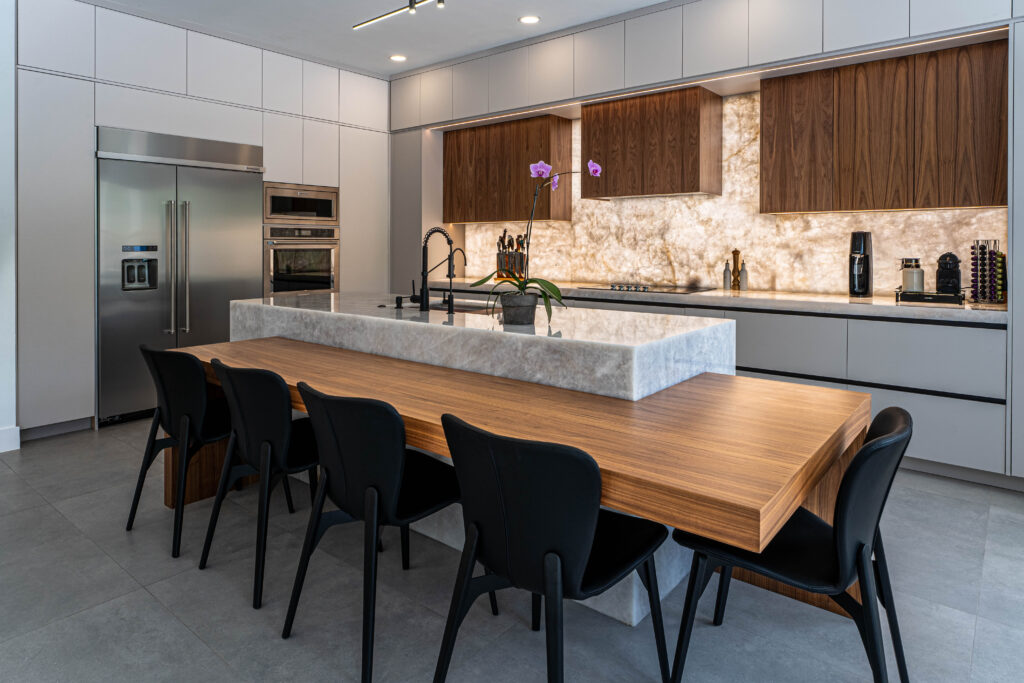
In cabinet design, the 1/3 rule is a guideline that divides kitchen cabinet space into thirds, with one-third allocated to overhead cabinets and two-thirds to base cabinets. This strategic approach helps ensure a balanced and functional kitchen layout.
Following the 1/3 rule optimizes storage capacity, improves accessibility, and creates an aesthetically pleasing environment. By considering factors such as cabinet length, room dimensions, and intended functionality, a top cabinet installer can effectively apply the 1/3 rule to enhance your kitchen’s overall design.
Why the 1/3 Rule Is Crucial in Cabinet Design
The 1/3 rule is a fundamental principle in kitchen cabinet design. It suggests dividing the total cabinet length into three sections: one-third for overhead cabinets and two-thirds for base cabinets. This division ensures that the design remains visually appealing and functional.
By maintaining a harmonious balance between these two types of cabinets, you optimize both the aesthetic proportions and the practicality of the space. This rule not only enhances the overall design but also improves the workflow and ease of access in the kitchen, making it more efficient to work in.
How to Properly Apply the 1/3 Rule in Cabinet Layout
To successfully implement the 1/3 rule in your kitchen design, begin by evaluating the total length of your cabinet run. From there, divide the space: allocate one-third to overhead cabinets and two-thirds to base cabinets. Keep the following considerations in mind as you divide your cabinets:
- Functionality: Ensure the layout supports how the space will be used.
- Aesthetics: Maintain visual balance by evenly distributing cabinet sections.
- Storage Requirements: Allocate space based on the items you plan to store in each section.
- Workflow Optimization: Arrange cabinets to promote a smooth kitchen workflow.
- Accessibility: Place frequently used items in easily accessible locations.
Cabinet Hardware: Applying the 1/3 Rule to Pulls and Knobs
In addition to organizing cabinet space, the 1/3 rule can also guide the selection of cabinet hardware. For drawer pulls, the rule suggests that the pull should be approximately one-third the width of the drawer. In some interpretations, this also applies to cabinet doors, where the pull should be one-third the height of the door.
This approach creates a visually pleasing proportion while maintaining functionality, ensuring that the hardware complements the overall cabinet design. Adhering to this guideline helps maintain balance and enhances the overall aesthetic of your kitchen.
Creating a Balanced Cabinet Design
Achieving balance in cabinet design requires a thoughtful blend of visual appeal and practical usability. To create an appealing design, make sure the dimensions and style of your cabinets align with the overall room proportions. Symmetry is key; evenly distribute cabinets around a central point to enhance visual harmony.
Additionally, place cabinets based on their intended use, ensuring that frequently used items are within easy reach. This balance between aesthetic considerations and functionality will result in a cohesive and well-organized kitchen.
Common Mistakes in Cabinet Design to Avoid
When implementing the 1/3 rule, there are a few common mistakes to watch out for. Failing to consider proper measurements, spacing, and layout can negatively impact both the functionality and look of your cabinets. Avoid these common pitfalls:
- Ignoring clearance for doors and drawers: Ensure there’s enough space for doors and drawers to open fully.
- Underestimating the impact of hardware: The right hardware placement can greatly affect the overall look.
- Disregarding kitchen workflow: Think about how the layout affects ease of movement and efficiency.
- Neglecting lighting: Proper lighting can accentuate the beauty and functionality of your cabinets.
- Overlooking ventilation: Certain cabinet contents may require specific ventilation for optimal use.
Benefits of Using the 1/3 Rule for Cabinets
By following the 1/3 rule, you can ensure both functional and aesthetic benefits in your cabinet design. This guideline promotes balanced cabinet proportions that result in a harmonious space. The benefits of applying this rule include:
- Maximized Storage: With careful allocation, you make the most of your cabinet space.
- Improved Accessibility: Properly divided cabinets ensure easy access to frequently used items.
- Enhanced Visual Appeal: A well-balanced cabinet layout creates a pleasing aesthetic in the kitchen.
- Better Workflow: An efficient layout improves kitchen functionality and convenience.
Real-Life Examples of the 1/3 Rule in Action
Successful application of the 1/3 rule can be seen in various design projects, demonstrating its ability to create balanced, functional kitchen layouts. Notable benefits include:
- Visual Harmony: The 1/3 rule achieves a balanced design that enhances the kitchen’s visual appeal.
- Storage Efficiency: Properly proportioned cabinets optimize storage capacity without compromising style.
- Ease of Use: Cabinet layouts based on the 1/3 rule provide easy access to stored items, reducing kitchen clutter.
- Focal Points: Strategic placement of cabinets draws attention to key design features.
- Promoted Organization: The rule encourages an organized kitchen, helping maintain a clutter-free space.
Contact Us
Start your custom kitchen project! The team at Mahogany Kitchens is here to help
📞 Call Us: (561) 770-6563
📧 Email: info@mahoganykitchens.com
🏢 Visit Us: 2463 Quantum Blvd, Boynton Beach, FL 33426
🕒 Hours: Monday – Friday, 9:00 AM – 5:00 PM
Reach out today to discuss your dream kitchen or schedule a consultation!
Related Topics: